






(function(w,d,s,l,i){w[l]=w[l]||[];w[l].push({'gtm.start': new Date().getTime(),event:'gtm.js'});var f=d.getElementsByTagName(s)[0], j=d.createElement(s),dl=l!='dataLayer'?'&l='+l:'';j.async=true;j.data-privacy-src= 'https://www.googletagmanager.com/gtm.js?id='+i+dl;f.parentNode.insertBefore(j,f); })(window,document,'script','dataLayer','GTM-K8FMPQ9K');
Should-Cost Modelling2026-06-15T08:16:48+00:00

Should-Cost Modelling

Build Should-Cost Models in Minutes

Use our tool to quickly develop powerful pricing models that put you in the driver’s seat. Get an accurate view of changes to suppliers’ costs so you can negotiate prices with data-driven authority.

No credit card required.

How it Works

ProPurchaser’s should-cost modelling tool funnels commodity raw material data into buyer-centric models built for price negotiations leverage.

1. Create Directionally Accurate Models

Respond to supplier price increases (or proactively seek decreases) by creating a first-pass model that makes your case convincingly, using accurate cost data for suppliers’ inputs.

2. Refine with Supplier Feedback

Encourage supplier feedback to easily create a second-pass model that ensures supplier buy-in, and, at the same time, reinforces your position for better pricing.

3. Put Should-Cost Analysis on Autopilot

Set it (but don’t forget it). ProPurchaser’s should-cost models update monthly and send alerts, so you never miss an opportunity to negotiate better pricing.

Testimonials

Powering Top-Tier Professionals
since 2001

ProPurchaser Should-Cost Modeling is the best way to prepare for a price negotiation.

Michael Brown, Director of Strategic Sourcing
Allied Motion Technologies

With ProPurchaser, we feel prepared to enter negotiations with suppliers.

Chris Mikolajewski, Procurement Specialist
Hartzell Propeller

ProPurchaser is a small investment that can drive cost savings for your company.

Gina Boland, Director of Strategic Sourcing
Group O

Frequently Asked Questions

What is a should-cost model?2026-05-20T13:24:36+00:00

A should-cost model is a tool that helps buyers estimate what a purchased part or material should cost, based on changes to a supplier’s raw materials and other direct inputs. It’s one of the most valuable negotiating tools available to procurement professionals. You can read our full definition in our procurement glossary.

Where does ProPurchaser’s should-cost modelling data come from?2026-05-20T13:24:52+00:00

ProPurchaser’s material tracking data is aggregated from hundreds of verified online and offline sources and interpreted by our researchers and industry experts.

Can I share should-cost models directly with suppliers?2026-06-15T17:20:27+00:00

Yes. ProPurchaser actually encourages you to send 1st-pass should-cost models to suppliers within the platform. By accepting your supplier’s changes as is, you make them de facto owners of the revised results. These models are now much more valuable because they can no longer be disputed. And ProPurchaser’s modeling methodology ensures that models continue to favor the buyer, even when incorporating suppliers’ changes. We call these 2-pass models negotiator’s should-cost models.

How accurate are ProPurchaser’s should-cost models?2026-05-20T13:25:24+00:00

ProPurchaser’s should-cost models are directionally very accurate. And getting the direction right should be the prime purpose of a should-cost model built for buyers. It allows you to negotiate better pricing with irrefutable data-driven authority.

Do I need supplier cooperation to use this?2026-06-18T01:14:21+00:00

No. ProPurchaser’s first-pass should-cost model templates don’t require supplier input. They use commodity market data and rules of thumb (such as the 50/50 split) to establish a directionally accurate baseline you can start using right away. In practice, however, our members find that suppliers almost always respond and wind up co-owning a revised model.

Ready to start negotiating with
data-driven authority?

Get ahead of commodity movements—free for 30 days.

No credit card required.
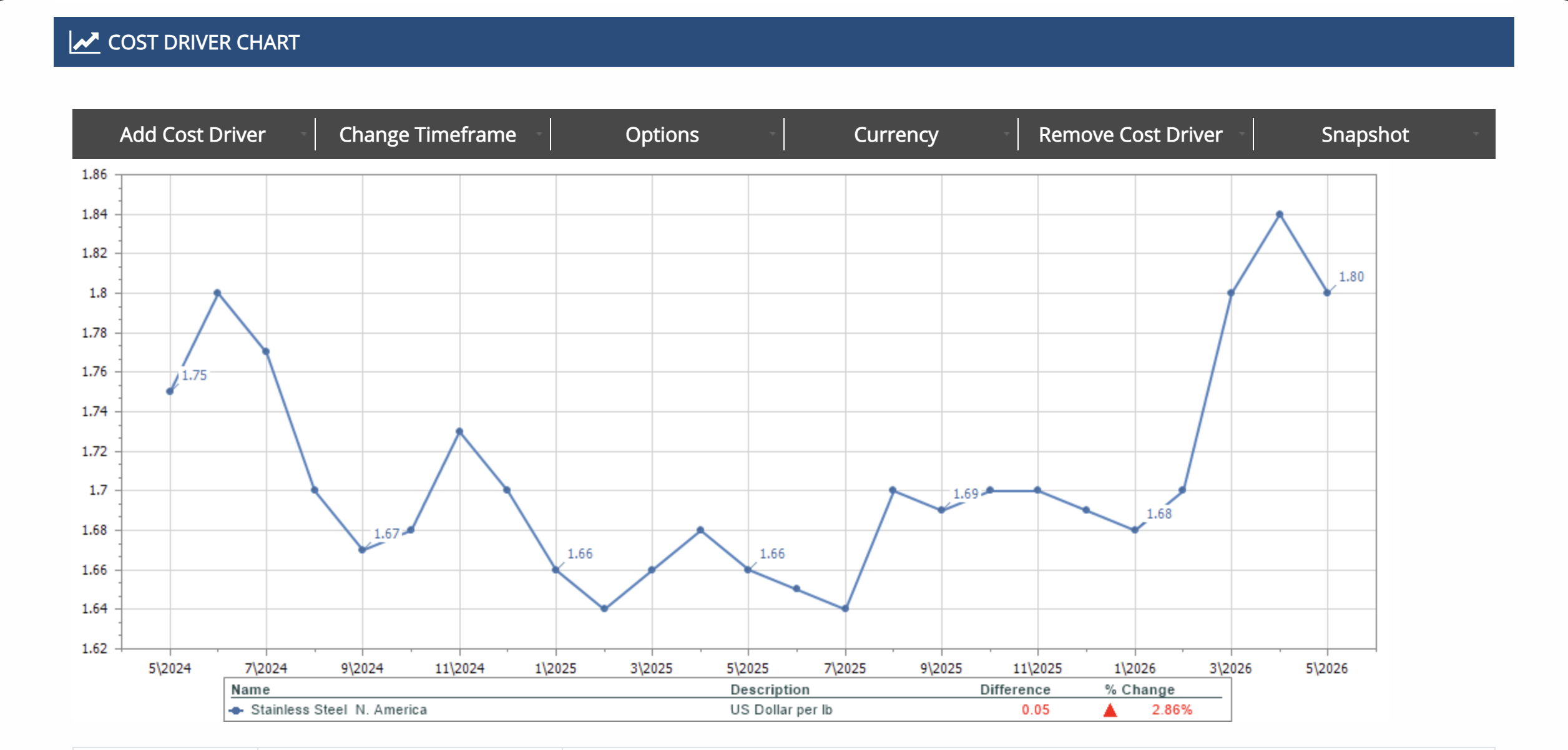
Screenshot of a cost tracking graph from the ProPurchaser platform.
Go to Top