

Webinar Summary

Everyone wants higher profit margins—and when a supplier’s direct material costs rise, it’s only natural that a price increase would follow. The challenge is determining when these price increases are supportable and when they’re disproportionately high.

In this tutorial, we show how a should-cost model built with ProPurchaser can help you evaluate, stop, and even prevent price and margin creep for good.

What You’ll Learn

  • How price creep happens.
  • The three steps for building a should-cost model.
  • How co-owned should-cost models stop price creep.

Extra Resources

Need more help challenging a supplier’s price increase? Below you'll find our pushback letter template to share your first-pass model and keep negotiations fair.
The 6-Point Price Creep Summary

  1. As raw material costs rise, suppliers raise prices disproportionately to protect or boost margins.
  2. A should-cost model can help you stop this price and margin creep.
  3. Start by building a first-pass model. Share it with your sales rep and ask for feedback.
  4. Incorporate their changes as-is. They now “own” the model.
  5. Agree that future pricing will follow this co-created model.
  6. In business-to-business procurement, not all customers pay the same price. Make sure your suppliers find their easy money elsewhere.

Knowledge is power. Knowing how to build a negotiator’s should-cost model empowers you to achieve lower pricing and stronger competitive position, whichever way raw materials costs move.

Use our pushback letter template to share your first-pass model and keep negotiations fair.

Ready to start negotiating with
data-driven authority?

Get ahead of commodity movements—free for 30 days.

No credit card required.
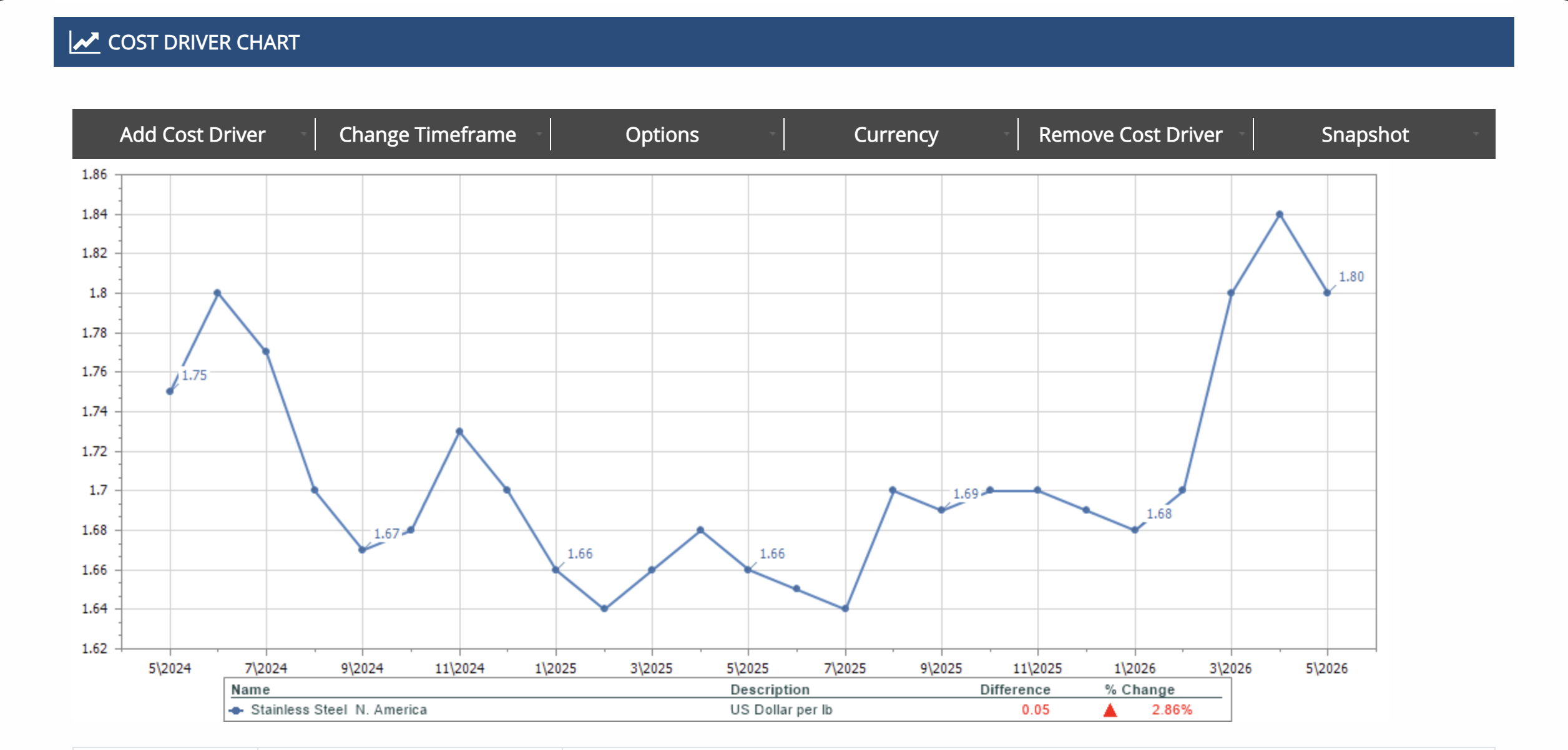
Screenshot of a cost tracking graph from the ProPurchaser platform.