

Webinar Summary

Measuring procurement performance against budgets can falsely imply that purchased material costs are under control when, in fact, the company is operating at a competitive disadvantage. That’s because static standards don’t reflect market changes or competitive positioning, and thus can’t paint an accurate picture of performance.

In this webinar, we explore a better way to measure negotiation performance by using raw material tracking and should-cost data modelling.
What You’ll Learn

  • Why budgets are great for managing pricing variances but not negotiating performance.
  • The preferred approach to measuring negotiating performance.
  • How companies can gauge their relative competitive position on costs.

Extra Resources

Improving Negotiating Performance: Tips for Procurement Leaders

  1. Provide staff with the training and data they need to build, implement, and maintain negotiators’ should-cost models (NSCMs).
  2. Make sure that 80% of your company’s direct spend is negotiated using NSCMs.
  3. Make it standard practice to continually compare actual prices paid to should-cost model figures.
  4. Encourage your negotiators to work with preferred suppliers on joint projects that focus on reducing material, production, and transportation costs.

Ready to start negotiating with
data-driven authority?

Get ahead of commodity movements—free for 30 days.

No credit card required.
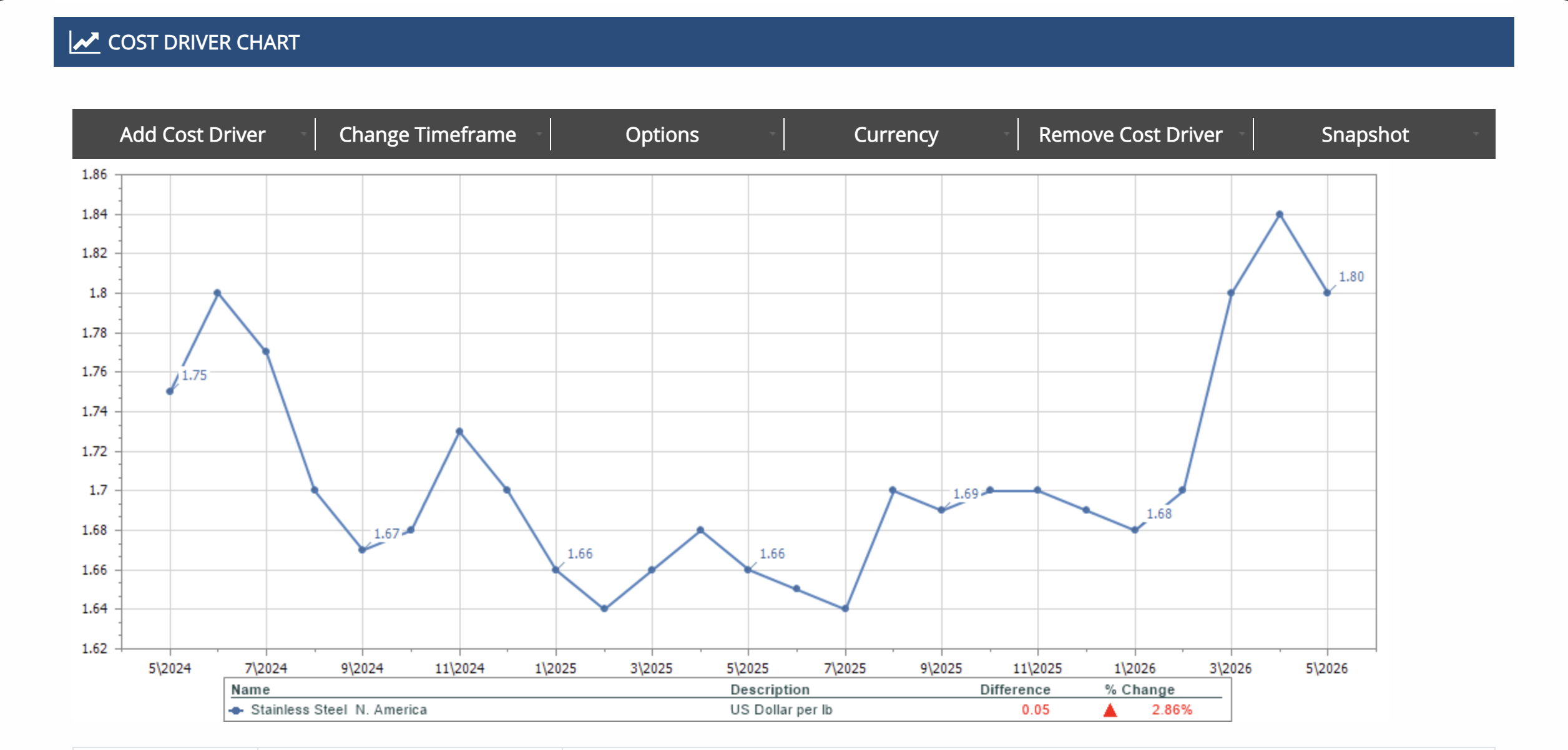
Screenshot of a cost tracking graph from the ProPurchaser platform.