
Webinar Summary
Let’s start with the obvious: Sales reps want to close—that’s how they get paid. And if price is an obstacle to that close, they’ll be keen to remove it.
Procurement’s job is to inject cost transparency into the negotiation so everyone can win. Procurement gets what they need—a lean, competitive price—and the supplier makes a profitable sale at a reasonable and sustainable margin.
In this webinar, we walk through how to arm your sales rep with graphs or should-cost models that make a compelling argument that their current prices are too high.
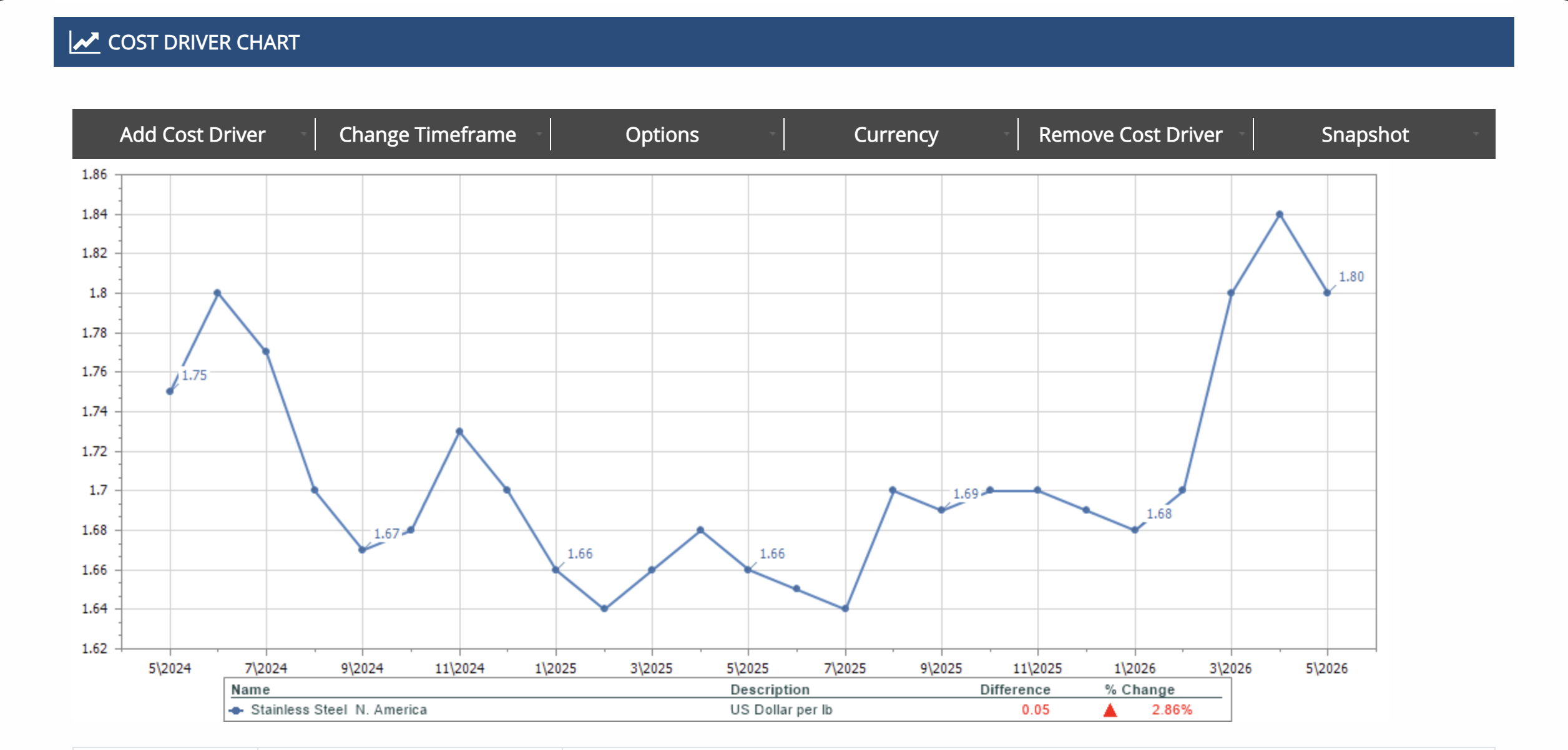
When a sales rep brings a buyer-generated graph or model back to their management, they probably say something like, “I can’t get my customer to agree. I can’t sell her the 2% increase. Look at this data she gave me, it shows our raw material costs are actually down and we should be dropping prices by 3%. Is this true? Are our costs really down?”
While likely not happy, the sales rep’s management team should be highly motivated to cooperate because their company’s reputation is at stake. Not agreeing to a decrease will paint them as greedy and hypocritical because, in the past, they justified raising prices based on higher input costs.
If higher input costs justify high prices, then lower input costs justify lower ones.
Once procurement arms the rep with information that shows input costs are falling, the supplier will feel strong pressure to play fair. Preserving a company’s good name is a fundamental senior management responsibility and a key to long-term business success. Sullying their company’s reputation is something they will want to avoid at all costs – and that is a cost initiative sales and procurement can both agree upon.
What You’ll Learn
Extra Resources
Below, you’ll find an automated pushback template that includes dummy data. Replace the figures with your own.
Related posts